Securely Fix Bathroom Furniture, Mirrors and Accessories with Confidence
When planning a bathroom renovation, most homeowners focus heavily on appearance, waterproof performance, and ease of cleaning. While choosing the wall panels to match your style is essential, there is another practical feature that is often overlooked until the installation is complete: the ability to securely fix items to the wall.
This is where Pro-Tek Stone Plastic Composite (SPC) panels offer a major advantage over many traditional hollow PVC wall panels.
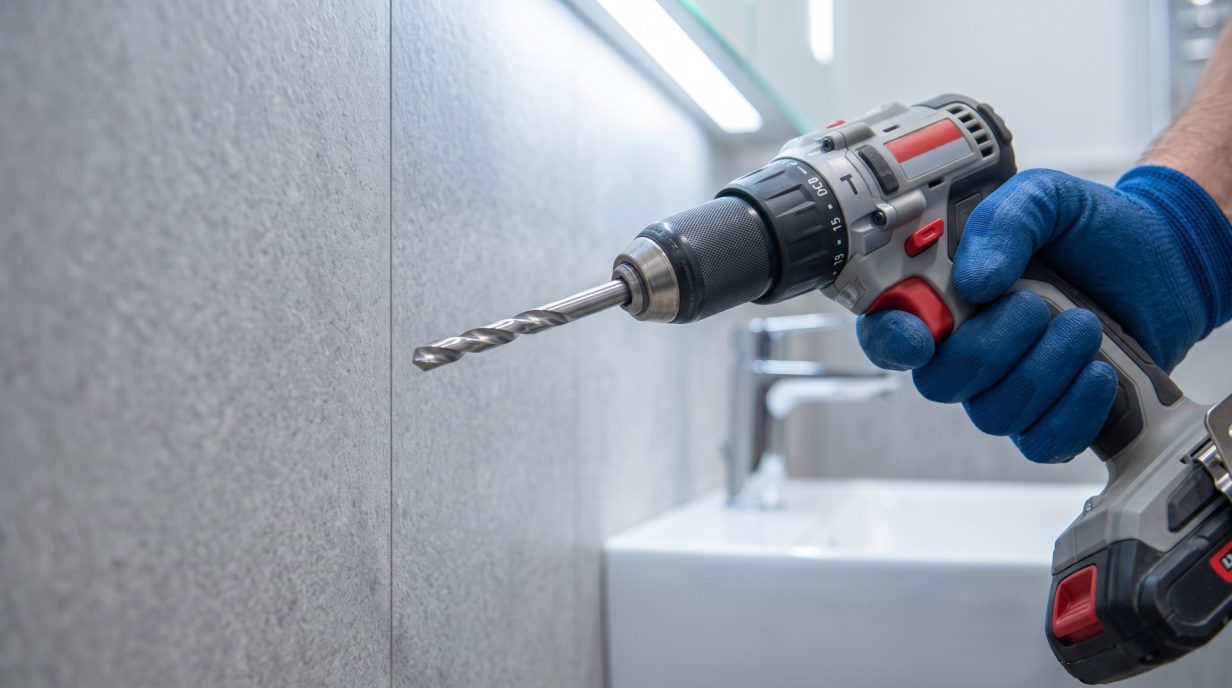
Unlike standard PVC cladding, which should never be drilled through to support wall mounted fixtures, Pro-Tek SPC wall panels are engineered with a dense, rigid solid core. This structural strength allows a professional fitter or experienced DIYer to safely drill through the wall panels so that heavy duty fixings can anchor directly into the solid, load bearing structural wall behind. The panel itself acts as a 100% waterproof wall finish, while the brickwork or timber studs behind provide the actual strength to hold your heavy items.
Jump to section
- What Is the Difference Between PVC and SPC Wall Panels?
- Why This Matters in Everyday Use
- What Can Be Fixed Through Pro-Tek SPC Wall Panels?
- 10 Pros and Cons of Drilling Through Pro-Tek SPC Wall Panels
- Best Practices for Drilling and Sealing SPC Wall Panels
- Frequently Asked Questions
What Is the Difference Between PVC and SPC Wall Panels?
To understand why one material can handle a drill bit while the other cannot, it helps to look at how these two types of bathroom wall panels are made and compare their physical properties.
- Core Type: Standard PVC panels feature hollow internal chambers. In contrast, Pro-Tek SPC panels are built with a solid stone polymer core.
- Rigidity: While budget PVC bends easily under pressure, SPC is firm and keeps its shape under heavy loads.
- Impact Resistance: Standard hollow plastic easily dents, cracks, and punctures. Pro-Tek SPC offers strong impact resistance, making it a great choice for busy family bathrooms.
- Drilling Capability: You should avoid drilling into standard PVC because of the high risk of cracking and leaks. However, drilling through SPC panels is safe and recommended when you need to secure fixtures to the structural wall behind.
- Structural Weight: PVC panels are very lightweight and fragile, whereas SPC panels are heavy, dense, and solid.
Why This Matters in Everyday Use
A bathroom is not just a wet room to be sealed off. It is a busy, working space that needs mirrors, heated towel rails, storage cabinets, and shelving to be practical and comfortable.
With standard PVC panels, you are often limited to using suction cups or sticky adhesive strips. These methods usually fail over time because of the heat and moisture in a bathroom.
With Pro-Tek SPC wall panels, you have the freedom to design your layout exactly how you want. Because you can safely drill through the solid core to anchor into the structural wall behind, you can mount heavy items precisely where you need them, even years after your bathroom renovation is finished.
What Can Be Fixed Through Pro-Tek SPC Wall Panels?
Because your wall plugs and screws anchor directly into the brickwork, blockwork, or timber studs behind the panel, you can mount almost any bathroom fixture with confidence:
- Heavy Storage: Mirror cabinets, floating vanity units, and wall mounted cupboards.
- Daily Conveniences: Heated towel rails, glass shower shelves, and wall mounted soap dispensers.
- Safety and Accessibility: Heavy duty grab rails, support bars, and wall mounted folding shower seats.
Internal Link Suggestion: If you are still in the planning stages of your layout, check out our step-by-step [Pro-Tek Wall Panel Calculator Guide] to figure out exactly how many panels you need to order to cover your room dimensions with minimal waste.
10 Pros and Cons of Drilling Through Pro-Tek SPC Wall Panels
The Pros
- Secure Fixing: You can anchor heavy bathroom furniture directly into the brickwork or timber stud wall behind the panel.
- Modern Style: The panels easily support floating vanity units and contemporary bathroom designs.
- No Cracking or Crushing: The solid core will not bend or crack when you tighten brackets and screws against the wall.
- Flexible Layouts: You can fit mirrors, cabinets, and shelving exactly where you need them in your room.
- Easy to Update: You can change your bathroom accessories or add new fixtures years later without ruining the SPC wall panels.
- Supports Safety Rails: You can safely fit grab rails and shower seats when they are anchored securely into the wall behind.
- Neat Finish: You do not need to rely on sticky pads, adhesives, or suction cups that often fall off in humid bathrooms.
- Strong and Durable: Solid core SPC cladding handles daily bumps and knocks much better than hollow PVC panels.
- Works with Standard Fixings: You can use regular wall plugs, screws, and plasterboard fixings without needing specialist tools.
- Built to Last: You get a sturdy and practical bathroom wall that stays looking fresh and reliable for years.
The Cons
- Needs Structural Support: The SPC wall panel cannot hold heavy weights on its own. Your screws must always go all the way through into the brickwork or timber stud wall behind.
- Risk of Water Leaks: If you do not seal the drilled holes with silicone, moisture can slowly work its way behind the waterproof wall panels over time.
- Needs the Right Drill Bit: Drilling through a dense stone polymer composite core requires a sharp masonry or multi material drill bit to get a clean hole.
- Hard to Hide Mistakes: If you drill a hole in the wrong place, you cannot easily patch or fill it without leaving a visible mark on your bathroom wall panels.
- Careful Planning Needed: You must check where your hidden plumbing pipes and electrical cables are located before you start drilling into the wall.
- Heavier to Handle: Because they feature a solid core, SPC panels are heavier to lift and hold in place during fitting than basic hollow PVC boards.
- Accurate Measuring Required: You need to measure carefully to make sure your brackets and screws line up with the timber studs or brick wall behind the cladding.
- Needs the Right Wall Plugs: You must use the correct wall plugs and fixings that match the brickwork, blockwork, or timber structure behind your wall panels.
- Basic Screws Are Not Enough: Standard plasterboard screws will not hold heavy items securely without a proper wall plug anchored into the solid structure behind.
- Follow Fitting Guides: You need to install and seal the panels according to the manufacturer instructions so you do not risk voiding your product warranty.
Best Practices for Drilling and Sealing SPC Wall Panels
While SPC wall panels are strong and easy to work with, it is important to follow a few simple rules to make sure your bathroom stays completely waterproof:
- Mark the Spot: Put a small piece of masking tape over the spot where you want to drill. This stops the drill bit from slipping on the smooth surface of the panel.
- Drill the Hole: Use a sharp masonry or multi material drill bit. Drill slowly through the SPC wall panel without using the hammer action on your drill. Once you get through the cladding and reach the brickwork or timber wall behind, you can finish drilling your hole.
- Apply Silicone: Before you push your wall plug into the wall, squeeze some bathroom silicone sealant directly into the drilled hole. Then push the wall plug into place. This creates a waterproof seal so that moisture cannot seep behind the panel or get into the structural wall.
- Mount the Bracket: Screw your accessory bracket tightly into place. Wipe away any extra silicone that squeezes out from around the edges with a damp cloth to leave a neat finish.
Frequently Asked Questions
1. Can you drill through wall panels made of SPC?
Yes. Because Pro-Tek SPC wall panels feature a dense stone polymer solid core, you can easily drill through them so your screws can anchor safely into the structural wall behind the cladding.
2. Can you drill through standard PVC wall panels?
It is not recommended. Standard PVC wall panels are hollow and will crush, crack, or bend if you try to tighten brackets or mount heavy fixtures over them.
3. Will drilling a hole damage the waterproof seal of my shower enclosure?
Not if it is done correctly. You must always fill the drilled hole with bathroom silicone sealant before pushing your wall plug and screw into place. This stops moisture from getting behind the waterproof wall panels.
4. What drill bit should I use to drill through SPC panels?
A good quality multi purpose wood and metal drill bit or a sharp masonry drill bit running at a steady speed will cleanly cut through the stone composite core without chipping the top surface layer.
5. Can I hang a heavy mirror cabinet directly onto the SPC panel?
No. While the panel can easily handle the pressure of the cabinet sitting flat against it, the actual weight of the cabinet must be supported by screws anchored deep into the brickwork, blockwork, or timber stud wall behind the cladding.
6. Do I need special screws to mount items through SPC panels?
No, standard screws are fine. However, you must make sure the screws are long enough to pass all the way through the thickness of the SPC wall panel, through any tile adhesive, and sit deeply inside the wall plug in the structure behind.
7. Can I mount a folding shower seat through SPC wall cladding?
Yes. Because safety items like grab rails and shower seats are anchored directly into the solid structural wall behind, the rigid SPC panel acts as a strong and durable waterproof barrier on the surface.
8. What happens if I make a mistake and drill a hole in the wrong place?
Unused holes are hard to hide on patterned surfaces. You should double check all your measurements before you start drilling. If you do make a mistake, fill the hole with a colour matched silicone to keep the wall waterproof.
9. Can I glue accessories to SPC wall panels instead of drilling?
Yes, lightweight items like toilet roll holders or towel hooks can be fitted using strong grab adhesive. However, heavy items like vanity units, mirror cabinets, and large screens must always be fixed securely with screws into the wall behind.
10. Do I need a professional fitter to drill through my wall panels?
While confident DIY fitters with the right tools can easily drill through SPC wall panels, hiring a professional tradesperson is always recommended for heavy or expensive items like glass shower screens and floating vanity units.
What Other Bathroom Furnishings Can Be Fixed Through Pro-Tek SPC Wall Panels?
Because fixings are secured into the wall behind the panel, a wide variety of bathroom furniture and accessories can be installed.
Examples include:
- Bathroom mirrors
- Illuminated mirrors
- Mirror cabinets
- Vanity units
- Wall-mounted bathroom cabinets
- Floating bathroom furniture
- Towel rails
- Heated towel rails
- Toilet roll holders
- Robe hooks
- Soap dispensers
- Toothbrush holders
- Corner shelves
- Glass shelves
- Shower baskets
- Shower caddies
- Shower seats (when suitable wall fixings are used)
- Grab rails
- Accessibility support rails
- Hairdryer holders
- Storage baskets
- Wall-mounted bins
- Bathroom clocks
- Decorative wall art
- Small coat hooks
- Toilet brush holders
- Tissue box holders
The important point is that the fixing should always be secured into the structural wall behind the panel using the correct fixing method for the wall type.