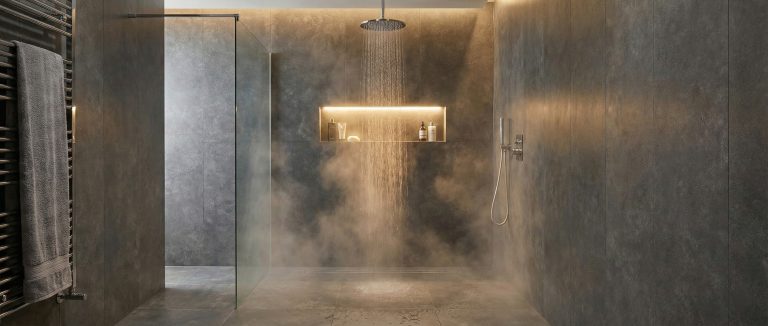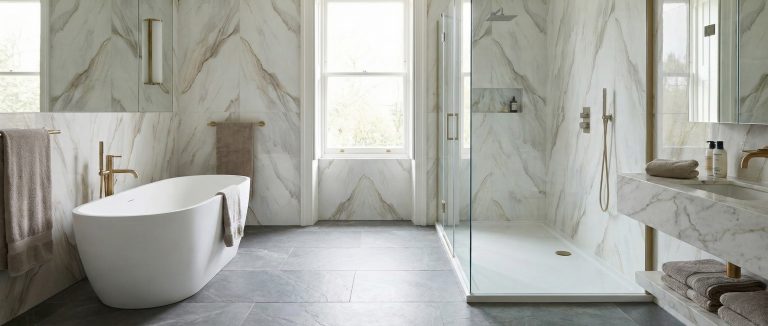
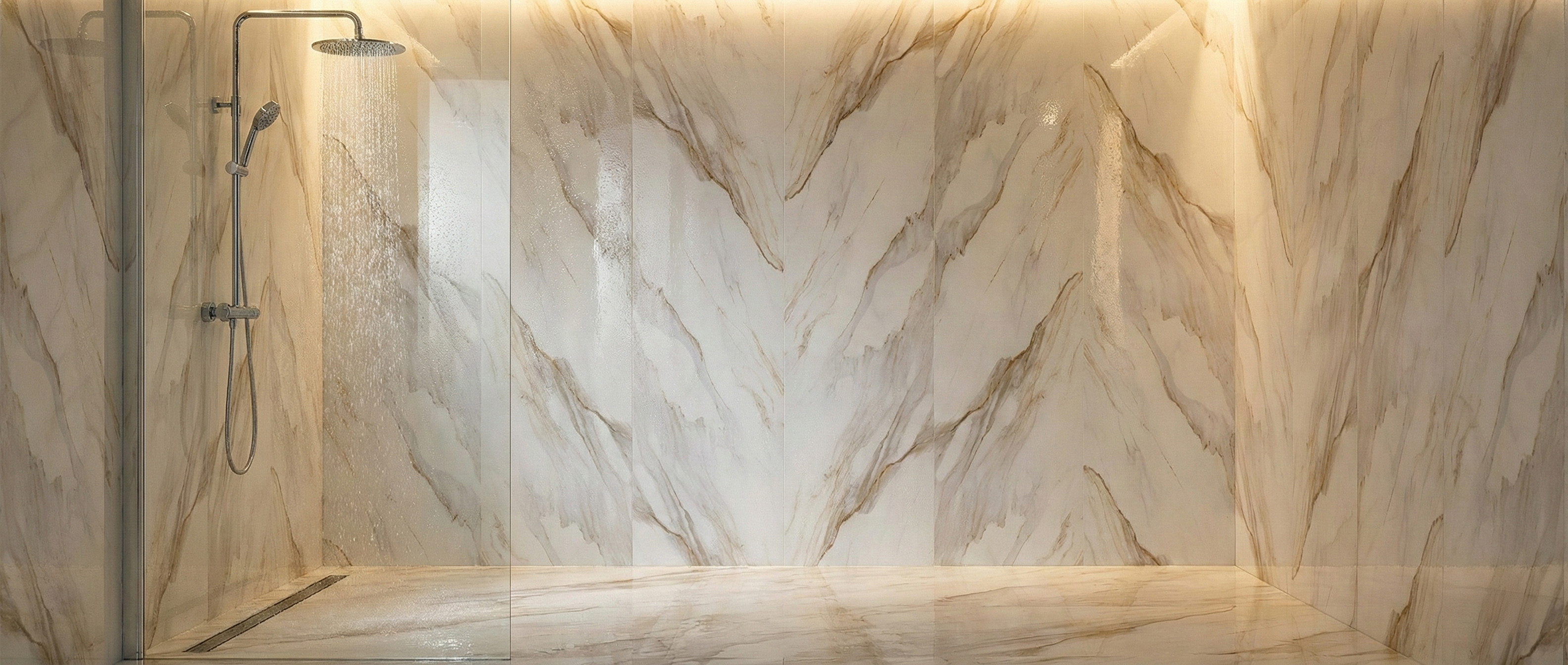
When planning a bathroom renovation, waterproofing is the most critical consideration. While tiles have been the standard for decades, they are prone to leaking if the grout fails. Wet wall panels are rapidly becoming the preferred alternative for British homeowners and installers alike. Offering a completely sealed, watertight surface that is both stylish and practical, they solve the perennial problems associated with traditional ceramic tiling.
In this guide, we explore exactly what waterproof cladding is and why it represents the future of bathroom design.
Jump To Section
- What Are Wet Wall Panels?
- The Advantages of Wet Wall Panels Over Tiles
- Styles and Finishes: Customising Your Wet Wall
- Pro-Tek™ Wet Wall Panels: Built to Last
- Cost Comparison: Wet Wall Panels vs. Tiling
- Installation: How to Fit Waterproof Panelling
- Final Thoughts on Wet Wall Panels
What Are Wet Wall Panels?
Bathroom wall panels are large-format sheets designed to cover bathroom walls, shower enclosures, and wet rooms. Unlike tiles, which are small individual units requiring grout, panels cover large areas in a single span.
Pro-Tek™ panels measure 2800mm in height, allowing for floor-to-ceiling coverage without horizontal joints. They are engineered to handle high-moisture environments, creating an impenetrable barrier that protects the structural walls of your home from damp and rot. While often used specifically in shower areas, they can be used to clad entire bathrooms for a cohesive, fully waterproof finish.
The Advantages of Wet Wall Panels Over Tiles
The shift towards SPC cladding is driven by several key benefits that address the limitations of tiling:
- 100% Grout-Free: Grout is porous, absorbs water, and discolours over time. By eliminating grout, you eliminate the main cause of leaks and mould growth.
- Hygiene: Without grout lines to harbour bacteria, the smooth surface of a panel is incredibly easy to sanitise. A simple wipe is all it takes to keep the room hygienic.
- Warmth: Unlike cold ceramic tiles, the Stone-Plastic Composite (SPC) core of our panels retains ambient temperature, making the walls feel warmer to the touch—a distinct advantage on chilly mornings.
Styles and Finishes: Customising Your Wet Wall
A common misconception is that waterproofing panels look clinical or “plastic.” However, modern manufacturing techniques allow waterproof boards to mimic natural materials with stunning realism. Pro-Tek™ offers a variety of finishes to suit any interior style:
- Seamless Elegance: Our Plain Collection offers a stone-effect finish without any visible join lines. This is perfect for creating a calming, spa-like atmosphere where the eye is drawn to the expanse of the material rather than grid lines.
- Realistic Tiling: For those who prefer a traditional look of a tiled finish, our Double Tile and Multi Tile collections feature Authentic Grout Line Technology. The grout lines are physically milled into the panel surface, providing the texture and look of ceramic tiles without the risk of leaks.
Pro-Tek™ Wet Wall Panels: Built to Last
Not all panels offer the same level of performance. Cheaper PVC options are hollow and brittle, making them susceptible to impact damage. Pro-Tek™ wet wall panels are manufactured using a solid SPC core.
This construction makes them exceptionally rigid and durable. They are 100% waterproof throughout, meaning they will never swell or warp, even in the steamiest wet room conditions. Furthermore, our surface technology includes built-in anti-fungal protection, ensuring that your bathroom remains not just waterproof, but mould-free for the lifespan of the product.
Cost Comparison: Wet Wall Panels vs. Tiling
When budgeting for a renovation, it is important to look beyond just the material cost. While high-quality composite panels are a premium product, they often work out cheaper than tiling when installation is factored in.
Tiling a bathroom is a labour-intensive process that can take a skilled tradesperson several days to complete, including prepping the wall, laying tiles, grouting, and sealing. In contrast, panels can be installed in a fraction of the time. This significant reduction in labour hours, combined with no need to purchase grout or specialist sealants, makes panels a highly cost-effective choice for achieving a luxury finish.
Installation: How to Fit Waterproof Panelling
One of the most attractive features for renovators is the speed of installation. Fitting wet wall panels is significantly faster than tiling.
- Preparation: You just need to ensure that you have a flat solid stable wall for the panels to adhere to.
- Adhesion: High-strength adhesive is applied to the back of the panel.
- Fitting: The panels slot together using a precision tongue-and-groove system, creating a seamless, watertight joint without the need for plastic connecting trims.
This process allows a full bathroom transformation to be completed in days rather than weeks, with minimal mess and disruption.
Final Thoughts on Wet Wall Panels
If you are looking for a bathroom solution that combines the visual appeal of luxury stone or tile with the technical performance of modern engineering, wet wall panels are the answer. They provide a robust, maintenance-free surface that looks incredible for years to come.
Stop worrying about leaking showers and mouldy grout. Explore the full range of Pro-Tek™ wet wall panels and upgrade your bathroom today.