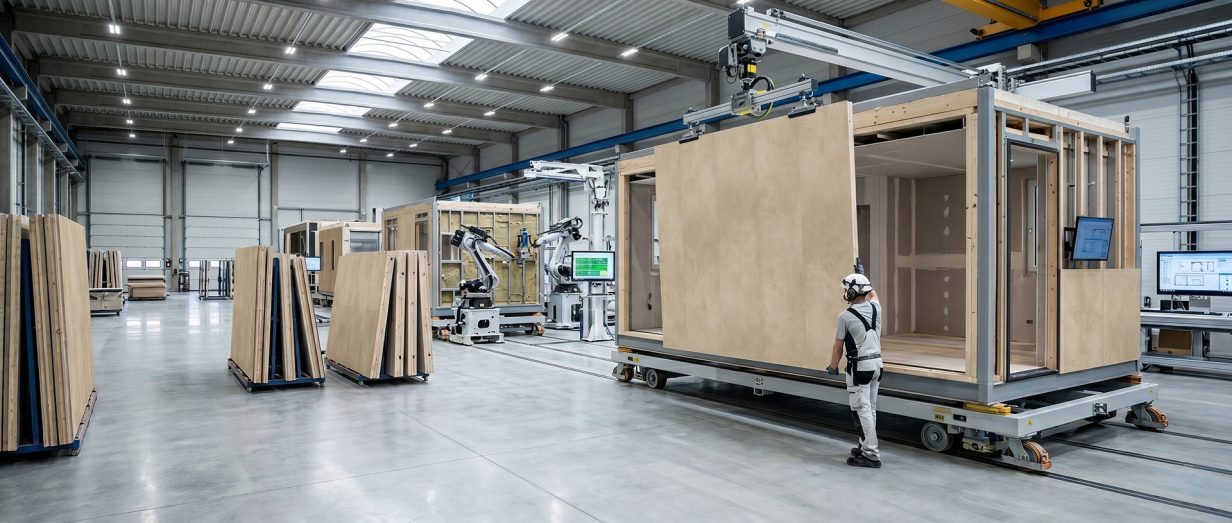
The UK construction industry is rapidly transitioning toward Modern Methods of Construction (MMC), with modular housing becoming one of the most efficient and scalable ways to deliver sustainable, high-quality homes. In this shift toward offsite construction, one factor remains non-negotiable: speed and operational efficiency. Modular manufacturers need materials that install quickly, perform reliably, and minimise bottlenecks on the factory floor to achieve optimal takt time and production capacity.
This is exactly why SPC (Stone Polymer Composite) wall panels are emerging as the ultimate internal cladding solution. Combining their strength when installed and the sheer number of visual choices, this plays a huge part alongside major time savings compared with traditional bathroom tiling, SPC panels are fundamentally transforming how modular homes are efficiently designed and built.
Jump To Section
- Time is Money: SPC Panels Supercharge Modular Build Efficiency
- Built for Modern Living: Superior Performance Advantages of SPC
- 100% Waterproof & The Ultimate Wet Area Solution
- Dimensional Stability & Long-Term Durability
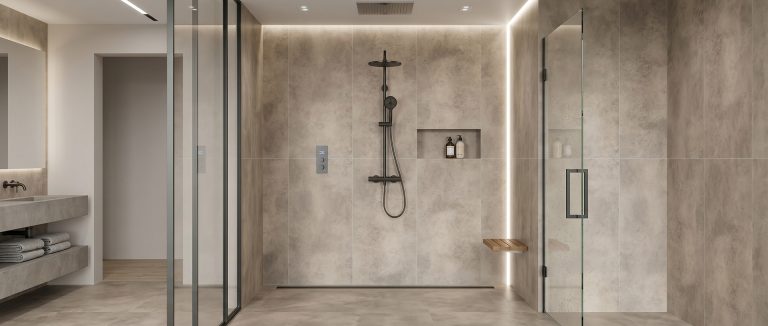
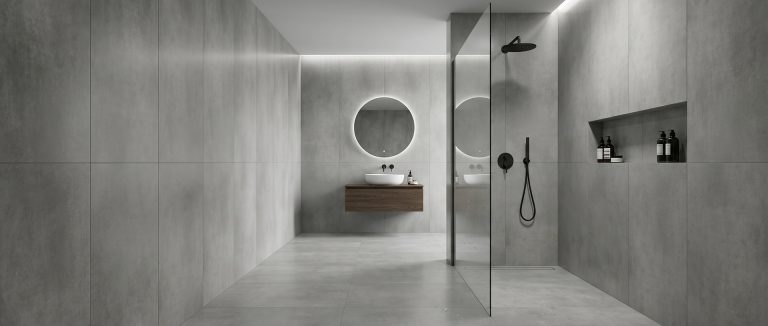
- High-End Visual Finishes for Market Appeal
- Logistical & Regulatory Benefits: Why Weight Matters in Modular Construction
- Vehicle Selection & UK Road Compliance
- Routing, Permitting, and Speed to Site
- Safer Lifting & Handling with Lower Structural Stress
- Cost & Risk Reduction: Lightweight Materials, Lower Financial Exposure
- Design & Engineering: Weight Considerations from Day One
- Q&A for Modular House Builders and Developers
- Conclusion: SPC Wall Panels Are Redefining Modular Construction in the UK
Time is Money: SPC Panels Supercharge Modular Build Efficiency
Modular housebuilding succeeds when production lines keep moving. Every minute saved directly increases manufacturing capacity, reduces overall build cost, and improves the ROI of offsite construction. SPC wall panels dramatically accelerate the internal fit-out phase, making them one of the most impactful upgrades a modular manufacturer can adopt for lean manufacturing.
1. Ultra-Fast Installation for High Output and Throughput
Traditional internal finishing methods—such as drywall installation, plastering, and tiling—require multiple skilled trades and introduce lengthy drying periods, creating inevitable delays. SPC panels eliminate these production bottlenecks due to their core design features:
- Tongue-and-groove / click-lock systems for seamless, tool-free alignment.
- Large-format panel sizes engineered for maximum wall coverage and rapid installation.
A wall finish that might take several days using conventional methods can be completed in hours, perfectly aligning with a rigid, high-volume factory production workflow. This translates directly into faster unit completion times.
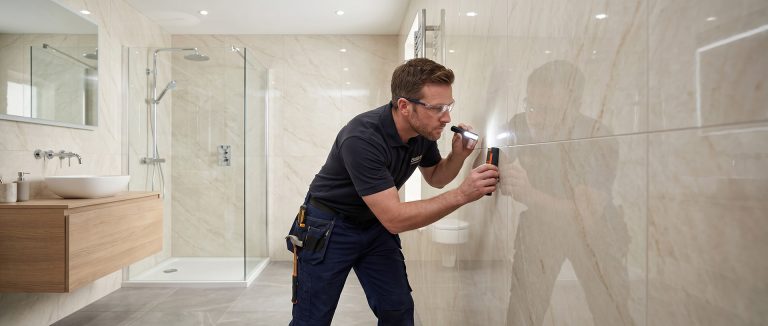
2. Pre-Finished, Snag-Free Surfaces for Immediate QC
SPC panels are supplied with a premium, robust decorative layer that authentically mimics high-demand finishes like natural stone, luxury marble, contemporary or traditional tile finishes. This pre-finished state means manufacturers completely bypass several labour-intensive, high-snagging processes:
- No plasterboard taping, jointing, or feathering.
- No wet-trade skim coats or extended drying times.
- No sanding, priming, or decorative painting.
- No messy tile setting, spacing, grouting, or vulnerable sealing.
This entirely removes the risk and time associated with drying and curing, instantly accelerating the path to Quality Control (QC) inspection, packaging, and dispatch, ensuring a right-first-time finish.
3. Lean Labour Management and Reduced Trade Dependency
Instead of managing a complex roster of plasterers, tilers, painters, and snagging teams, manufacturers can rely on a single, cross-trained installation crew. This simplification dramatically reduces:
- Direct labour costs and overhead.
- Scheduling conflicts and resource management complexity.
- Production interruptions caused by trade sequencing.
- The volume of onsite remedial or finishing work post-delivery.
For modular factories operating on tight deadlines, this makes the wall panels a no-brainer choice to have things done efficiently.
4. Stronger, More Resilient During Transport and Installation
Modular homes must withstand the dynamic forces of lifting, craning, and long-distance transit without suffering cosmetic or structural damage. SPC wall panels possess a dense, rigid stone-polymer core that provides exceptional resistance to:
- Cracks and fractures caused by chassis flex.
- Chips and scuffs from handling.
- Surface delamination or joint separation.
- Impact vibration during road haulage.
Compared with fragile plasterboard or brittle tile, the reduction in transit-related defects and costly snagging at the final site can be substantial, protecting the project budget and timeline.
Built for Modern Living: Superior Performance Advantages of SPC
While speed is the primary operational gain, the inherent performance characteristics of SPC panels make them superior for long-term residential use, meeting the high standards required for sustainable and low-maintenance housing stock.
100% Waterproof & The Ultimate Wet Area Solution
In high-moisture environments like bathrooms, ensuites, and kitchens, SPC panels decisively outperform traditional ceramic or porcelain tiles by completely eliminating porous grout lines. Grout is the typical failure point where mould, mildew, bacteria, and water ingress commonly occur. This makes SPC:
- Inherently hygienic and antimicrobial (when properly installed).
- Completely waterproof from front to back.
- Exceptionally easy to clean and sanitise with a simple wipe-down.
This durability is crucial for sectors like social housing, build-to-rent (BTR), student accommodation, and high-use modular homes, where lifecycle costs and tenant satisfaction are paramount.
Dimensional Stability & Long-Term Durability
The dense limestone-PVC hybrid core of SPC is engineered for stability, offering superior resistance to environmental stressors:
- Warping or bowing over time.
- Swelling from humidity or direct moisture exposure.
- Thermal expansion/contraction in varied climates.
This stability ensures the panel finish remains smooth, clean, and high-quality for an extended period, significantly reducing asset maintenance visits and lowering the overall Total Cost of Ownership (TCO).
High-End Visual Finishes for Market Appeal
SPC panels offer a premium finish and interior design flexibility without adding complexity or time to the build process. The high-resolution decorative layer allows manufacturers to offer sophisticated, market-ready styles:
- Opulent Luxury marble patterns (e.g., Calacatta, Carrara).
- Contemporary Textured stone effects and slate finishes.
- Industrial-chic Concrete and distressed finishes.
- Warm and inviting Rustic wood grains and planks.
Modular manufacturers can easily offer a tiered range of upgraded interior packages to developers and end-buyers without impacting the critical installation timeline.
Logistical & Regulatory Benefits: Why Weight Matters in Modular Construction
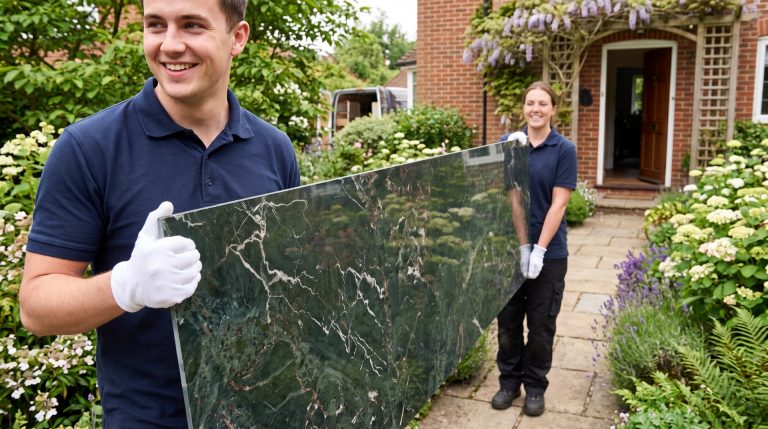
Accurate weight calculations are a non-negotiable component of engineering and transporting modular homes. Lighter internal finishes—like SPC panels compared to heavy ceramic tile, thick plaster, or dense cement board—bring major logistical advantages and contribute to the eco-efficiency of the transport phase.
Vehicle Selection & UK Road Compliance
The final total module weight is a critical factor influencing:
- The required trailer type and axle configuration.
- The complexity of load balancing and distribution.
- Compliance with stringent UK road weight limits and Abnormal Load (STGO) regulations.
SPC’s lighter profile helps streamline transport planning, potentially avoiding expensive specialised haulage.
Routing, Permitting, and Speed to Site
Oversized or overweight loads trigger the need for special route planning, escort vehicles, and specific local authority permits. Reducing module weight:
- Lowers the likelihood of requiring special permits, saving administrative time.
- Expands route options by avoiding weight-restricted bridges or roads.
- Reduces delays and enhances the predictability of site delivery.
Safer Lifting & Handling with Lower Structural Stress
Crane and forklift selection, as well as the design of lifting points, are directly dependent on module weight. Choosing SPC panels helps:
- Reduce static and dynamic stress on the module’s steel or timber structure.
- Lower the required capacity of heavy machinery on site.
- Improve the safety factor during the critical craning and placement process.
Cost & Risk Reduction: Lightweight Materials, Lower Financial Exposure
Weight directly affects both the variable transport costs and the manufacturer’s financial risk exposure. SPC panels are a key enabler of cost-efficient modular construction by providing several indirect savings.
- Cost Saving – SPC Wall Panel Advantage
- Transportation – Lower weight = Reduced fuel consumption, cheaper haulage rates, potential avoidance of costly escort vehicles.
- Structural Engineering – Lighter wall finish reduces the need for heavy structural reinforcement in the module frame, cutting steel/timber costs and engineering complexity.
- Risk & Insurance – Rigid core leads to lower transit damage and fewer claims, reducing the financial and reputational cost of remedial work.
- Lifecycle Costs – 100% waterproof and durable finish minimises long-term maintenance calls for the asset owner.
Design & Engineering: Weight Considerations from Day One
Weight is a fundamental input in modular projects, influencing everything from the initial structural design to the final placement plan. SPC supports sophisticated engineering by offering:
- Precise, predictable panel weights for accurate module calculation.
- Stable centre-of-gravity planning for safer transport.
- Seamless compatibility with structural engineering and M&E service runs.
This high degree of predictability supports regulatory compliance, enhances safety standards, and ensures consistent factory production quality.
Q&A for Modular House Builders and Developers
What is an SPC wall panel made from, and why is it ideal for modular builds?
SPC is a blend of natural limestone powder and PVC resin, creating a high-density, waterproof, and impact-resistant core perfect for offsite manufacturing and transport.
How much faster is SPC installation compared with tiling?
SPC can be up to five times faster, turning a multi-day tiling job into a few hours.
Does SPC require specialist installers?
No. Basic training is sufficient—no need for skilled tilers or plasterers.
Are SPC panels compliant with UK fire regulations?
Yes—quality panels meet required flame-retardant ratings. Builders must verify certification for their specific project.
How does the cost compare to plasterboard or tile?
Material cost may be similar or slightly higher, but total installed cost is significantly lower due to reduced labour and zero drying time.
Can SPC be used throughout the home?
Yes. Ideal for bathrooms and kitchens, but equally effective in bedrooms, hallways, and living spaces.
Do SPC panels reduce the weight of the modular unit?
Yes—SPC is far lighter than tiled walls, improving transport and lifting efficiency.
Are SPC panels prone to damage during lifting and fixing?
No—the rigid core is highly impact resistant, reducing snagging and cracks.
What environmental benefits do SPC panels offer?
Many panels use recyclable materials, are free from formaldehyde, and have long lifespans—reducing waste and improving indoor air quality.
Conclusion: SPC Wall Panels Are Redefining Modular Construction in the UK
For modern modular housebuilders seeking to maximise speed, consistency, and long-term durability, SPC wall panels offer a clear and sustainable competitive edge. They drastically reduce critical installation time, improve overall factory output and throughput, enhance module resilience during transport, and deliver stylish, low-maintenance interiors that meet the demands of high-volume residential development.
As the UK accelerates its adoption of MMC and industrialised offsite manufacturing, SPC wall panels are fast becoming one of the most efficient, cost-effective, and future-proof solutions for sustainable modular construction.
Ready to Transform Your Space? Contact Protek Today
Whether you’re a homeowner, designer, or trade professional, Protek is here to help you create stunning, long-lasting interiors with our innovative SPC wall panels.
For product advice, samples, or trade pricing, get in touch with our team:
📞Phone:020 3917 5550
📧Email:info@protekflooring.co.uk
🌐Trade Sign-Up:Sign up here for your exclusive discounts!
📍Website:https://protekwallpanels.co.uk/Join the thousands of customers choosing Protek for smarter, faster, and more stylish wall solutions.