If you are planning a room update, you have probably spent hours scrolling through wall panelling ideas online. As someone who works with wall coverings regularly, I always tell people to look past the highly edited magazine photos and think about how the wall will actually hold up to daily life. Let’s face it: paint scuffs quickly in busy areas, wallpaper peels when the air gets damp, and traditional ceramic tiles rely on cement grout that eventually turns yellow and needs heavy scrubbing.
Pro-Tek™ Stone-Plastic Composite (SPC) panels offer a highly practical alternative. Manufactured from a dense core of limestone powder and PVC resins, these boards provide a hardwearing, 100% waterproof surface. Let’s look at exactly how you can use large-format SPC panels across different rooms in your home to solve common maintenance headaches while getting a premium finish.
Jump To Section
- Why Consider SPC for Your Wall Panelling Ideas?
- Wall Panelling Ideas for the Bathroom
- Kitchen Splashback Upgrades
- Wall Panelling Ideas for Hallways and Boot Rooms
- Essential Preparation and Installation Steps
- Final Thoughts on Wall Panelling Ideas
Why Consider SPC for Your Wall Panelling Ideas?
When you ask tradespeople what they use in their own homes, they usually point to materials that save them time on maintenance and products that they have tried and trusted. SPC panels do exactly that.
The core of the panel is solid and rigid, meaning it absorbs physical knocks much better than hollow plastic cladding. On top of that, the wear layer is completely non-porous. Water, soap, and dirt simply sit on the surface, waiting for you to wipe them away with a damp cloth. You get the visual traits of real stone or ceramic tile, but without the porous grout that traps dirt.
Wall Panelling Ideas for the Bathroom
I see it all the time: a beautifully tiled wet room ruined a year later by black mould clinging to the grout lines. Shower enclosures deal with constant water, and cement-based grout acts like a sponge.
When exploring wall panelling ideas for wet areas, SPC boards bypass the grout problem entirely.
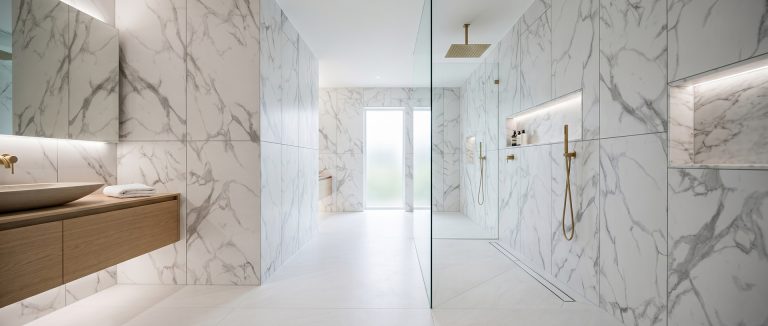
Practical Idea: You can create a “hotel-luxe” wet room by using our Double Tile collection in a High Gloss Marble finish. Because the panels are 2800mm high, they cover the wall from floor to ceiling without horizontal joins. These panels actually feature authentic milled grout lines that are physically cut into the panel substrate using a CNC router. This gives you the physical texture of a real tile joint, but because it is sealed and non-porous, water just beads and runs off.
Kitchen Splashback Upgrades
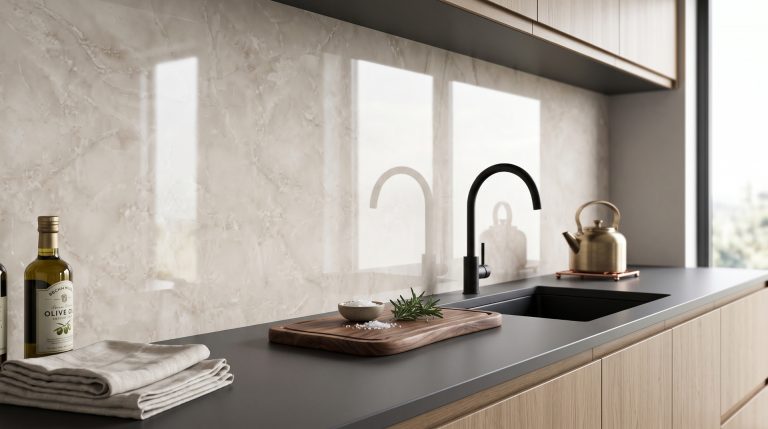
Kitchens take a hammering from cooking oil, boiling water splashes, and food stains. Using SPC panels as a kitchen splashback provides a wipe-clean surface that actively resists staining. Because the panels are manufactured in large formats, you can cover the entire space between your worktop and upper cabinets rapidly.
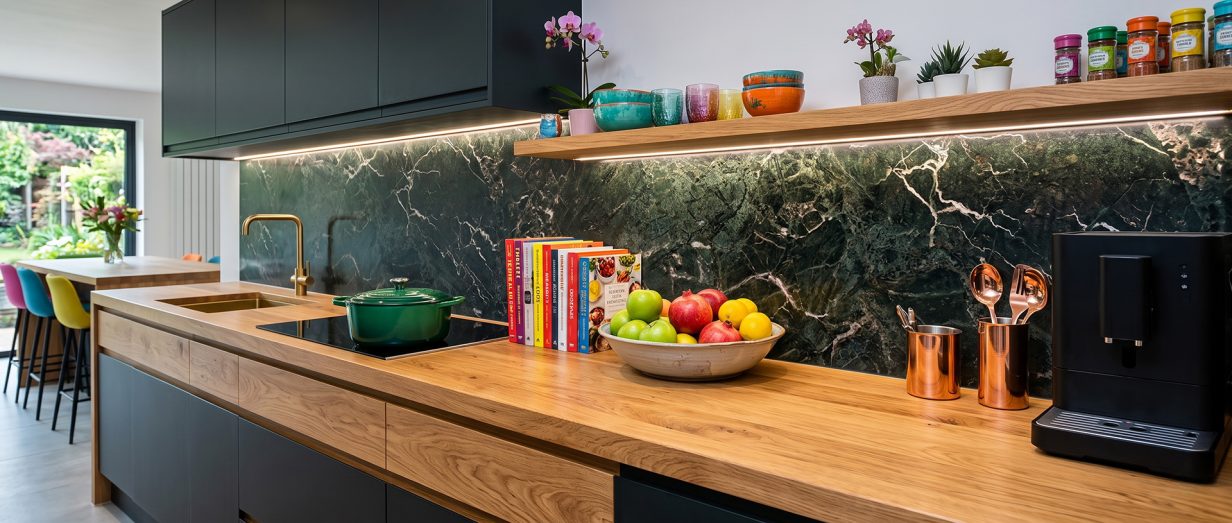
Practical Idea: Try a high-contrast approach. Pair dark matte kitchen cabinets with our light-reflecting Argos Black marble-effect panels to create a moody, high-end cooking space. Note: If you are fitting these panels behind a direct heat source like a gas hob, you must fit a clear toughened glass splashback directly over the panel to protect the SPC material from the naked flame.
Wall Panelling Ideas for Hallways and Boot Rooms
Hallways and utility rooms are the hardest-working spaces in a house. They deal with muddy boots, wet coats, and bags scraping against the walls. Standard plasterboard dents and marks easily under this kind of physical impact.
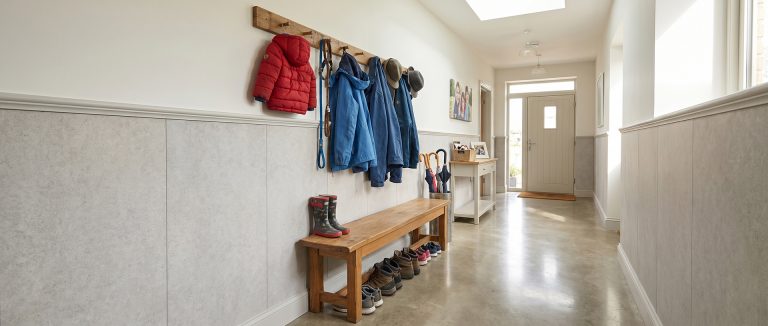
Practical Idea: One of the smartest wall panelling ideas for high-traffic zones is the classic half-wall (or wainscoting) installation. Install our Plain Collection stone-effect panels on the lower half of your hallway walls and cap them with a simple wooden dado rail. This creates a protective, wipe-clean barrier that stops scuffs from ruining your paintwork, keeping the busiest area of your home looking fresh.
Essential Preparation and Installation Steps
Achieving the full lifespan of your panelling relies entirely on the preparation. This is a dry installation method using high-strength grab adhesive, but you cannot cut corners on the substrate.
- Tile Removal: I always get asked if you can just stick panels over old tiles. The answer is no. Old tiles must be completely removed to ensure the adhesive bonds directly to the structural wall.
- Flatness Tolerance: The underlying wall surface must be perfectly flat. You must check the wall with a straight edge, ensuring a flatness tolerance of no more than 2mm over a 2-metre span. Any deviation beyond this limit must be levelled before fitting.
- Fixing: Once the wall is verified flat, the panels are cut to size with standard power tools, adhered to the wall, and interlocked using their tongue-and-groove edges.
- Expansion Gaps: A 4mm expansion gap must be left at the floor, ceiling, and internal corners. You then fill this gap with sanitary silicone.
Final Thoughts on Wall Panelling Ideas
Upgrading your home does not have to mean dealing with messy wet trades, endless dust, or materials that require you to scrub them every weekend. The most effective wall panelling ideas are those that look great while actually making your life easier.
By choosing SPC panels, you gain a hardwearing, 100% waterproof surface that mimics the visual features of high-end stone without the maintenance headaches.
Ready to see the colours and feel the milled grout lines for yourself? Order your free wall panel samples from Pro-Tek™ today and start planning your next room upgrade.