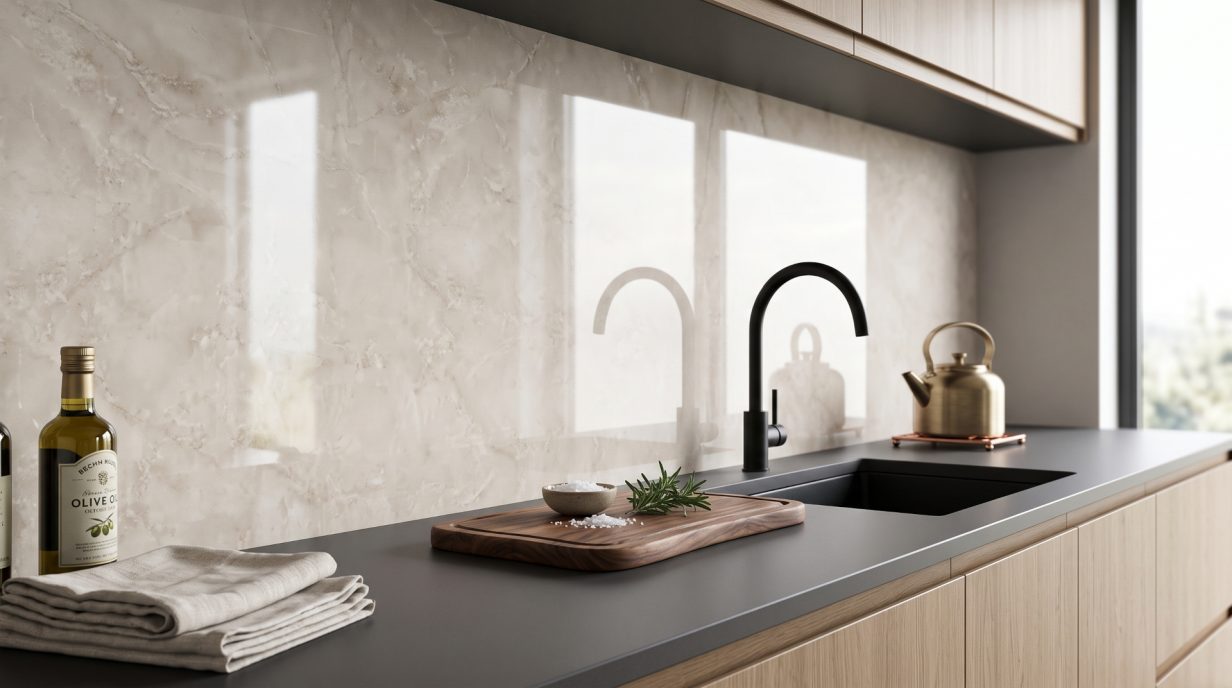
A kitchen splashback is more than just a way to protect your plasterwork. It plays a big part in the overall design of your room, helping to create a clean look while shielding your walls from everyday cooking grease, food stains, and water splashes.
If you are looking for an alternative to traditional kitchen tiles, Pro-Tek Stone Plastic Composite (SPC) wall panels offer a practical and dependable solution. Built with a strong solid core, these panels make great kitchen splashbacks. They give you a smooth, grout free finish that needs very little maintenance, saving you from the frustration of scrubbing dirty and stained tile grout.
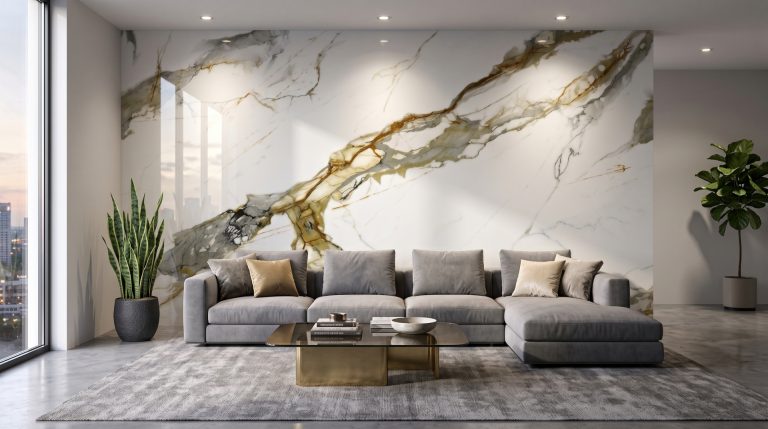
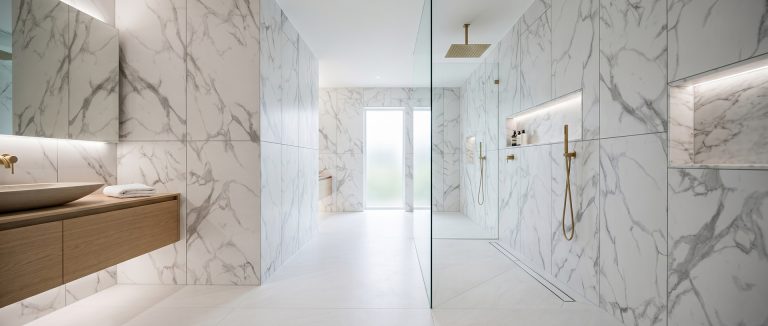
Among the wide range of styles available, the high gloss marble effect finish is a very popular choice for homeowners. It gives you the look of real natural stone without the heavy weight, high cost, or ongoing sealing work that comes with genuine marble slabs.
Jump to section
- Why Use Pro-Tek SPC Wall Panels as a Kitchen Splashback?
- Key Differences Between SPC Wall Panels and Traditional Tiles
- Installing SPC Wall Panels as a Kitchen Splashback: The Horizontal Method
- High Gloss Marble: A Customer Favourite
- Easy to Clean and Maintain
- Important Considerations Around Heat and Kitchen Hobs
- Ideal Locations for Pro-Tek Kitchen Splashbacks
- 10 Pros and Cons of Using Pro Tek SPC Wall Panels as Kitchen Splashbacks
- Frequently Asked Questions
Why Use Pro-Tek SPC Wall Panels as a Kitchen Splashback?
Homeowners are moving away from traditional tiled splashbacks in favour of large format wall cladding. While kitchen tiles look great, they come with one major downside: grout lines. Over the years, grout soaks up cooking oils, grease, and steam. This leads to stubborn stains and discolouration that need regular scrubbing with harsh chemicals to keep clean.
Pro-Tek SPC wall panels give you a completely smooth, waterproof surface with very few joins. This creates a clean and hygienic finish that works really well in both modern kitchens and traditional rooms.
Because of their large size, a single panel can often cover a long section of your worktop from end to end. This gives your kitchen a neat and continuous look that is hard to achieve with hundreds of individual kitchen tiles.
Key Differences Between SPC Wall Panels and Traditional Tiles
To see how these materials compare for everyday kitchen use, it helps to look at their practical features side by side:
- Joints and Seams: Traditional kitchen tiles have dozens of tiny grout joints that easily collect dirt and grease. SPC wall panels provide a smooth surface with a simple click system that fit tightly together.
- Maintenance Level: Tiles need regular grout cleaning and sealing to stop them from staining. SPC panels just need a quick wipe with a soft cloth and warm soapy water to keep them clean.
- Installation Speed: Tiling is a slow process that can take several days and involves tile adhesive, spacers, cutting, and grouting. SPC panels can be fitted in a fraction of the time using strong grab adhesive.
- Risk of Cracking: Ceramic and porcelain tiles can easily crack or chip if you knock them with heavy pots and pans. Rigid SPC wall panels feature a dense stone polymer solid core that handles daily bumps without cracking.
Installing SPC Wall Panels as a Kitchen Splashback: The Horizontal Method
When fitting Pro-Tek SPC wall panels as a kitchen splashback, the installation layout is slightly different from a standard vertical bathroom or shower room project.
Our panels measure 600mm wide by 2800mm long, making them the tallest waterproof wall panels available in the UK. For a standard kitchen splashback, where the gap between your worktop and the bottom of your wall cabinets is usually between 450mm and 600mm, the panels are turned sideways and fitted horizontally.
By running the 2800mm length horizontally along your kitchen worktop, the 600mm width becomes the height of your splashback. This setup allows a single continuous panel to run up to 2.8 metres along your kitchen wall without needing a single vertical join or seam. For most standard UK kitchens, one or two horizontal panels are usually enough to cover the entire length of your main worktop with very little cutting required.
High Gloss Marble: A Customer Favourite
Of all the styles available, high gloss marble effect wall panels are the most popular choice for kitchen splashbacks.
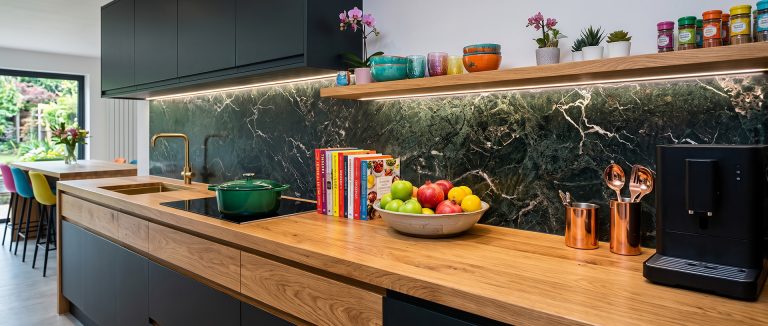
The glossy surface catches both natural daylight and under cabinet LED lighting. This helps bounce light around the room, making your kitchen feel brighter and more open. The realistic marble veining adds a natural stone look that works really well with a wide range of kitchen cabinet colours, from dark navy and forest green to clean white and warm oak.
Because the marble design covers a large continuous sheet rather than small individual kitchen tiles, the pattern flows smoothly across your wall without interrupting the design. You get the appearance of real stone slabs without paying the heavy price tag or dealing with the difficult fitting process of genuine marble.
Easy to Clean and Maintain
The kitchen is a busy and messy room. Between spitting hot oil from frying pans, bubbling tomato sauces, and flying flour during baking, your kitchen splashback deals with a lot of daily wear and tear.
Cleaning a Pro-Tek SPC wall panel splashback is straightforward. Because the stone polymer surface is solid and completely sealed, grease and liquids cannot soak into the material. There are no grout lines to absorb cooking oils or hold onto stubborn food stains. You can easily wipe away cooking residue using a soft damp cloth and warm soapy water or a gentle kitchen spray.
Your kitchen wall stays looking fresh and clean with only a fraction of the time and effort it takes to scrub traditional ceramic tiles.
Important Considerations Around Heat and Kitchen Hobs
While Pro Tek SPC wall panels are strong and built to last, like all composite and plastic products, they are not designed for constant exposure to direct heat. If you plan to install your kitchen splashback near a cooker or hob, keep the following safety advice in mind:
- Induction and Electric Hobs: These hobs heat your pots and pans directly rather than pushing lots of heat into the surrounding air. This makes SPC wall panels safe to use behind them. However, you should still follow the manufacturer instructions and leave a safe gap between the back edge of your hob and the wall cladding.
- Gas Hobs and Range Cookers: Gas burners create open flames and a large amount of rising heat. If your panels sit too close to extreme temperatures for long periods of time, the surface can warp or become damaged.
- The Solution: For the wall space directly behind a gas hob or range cooker, we recommend fitting a heat resistant splashback panel, such as a toughened glass screen or a stainless steel plate, right behind the burners. You can then run your Pro Tek SPC wall panels along the rest of your kitchen worktops to complete the look.
Ideal Locations for Pro-Tek Kitchen Splashbacks
Beyond the main run behind your hobs, SPC panels are incredibly versatile and can be used in numerous areas around your kitchen:
- Behind Sinks: Provides an absolute waterproof wall barrier against water splashes from washing up.
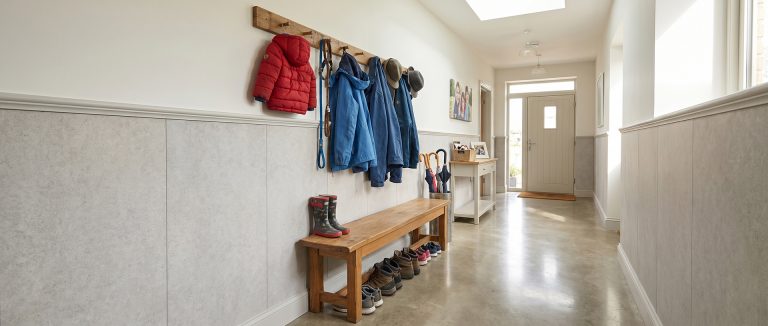
- Utility Rooms and Boot Rooms: Protects walls from wet washing machines, muddy shoes, and wet dogs.
- Coffee Stations and Pantries: Creates a stylish, easy-to-wipe feature wall behind your espresso machine or shelving.
- Breakfast Bars: Adds a highly durable, kick-resistant surface to the wall under your kitchen island seating.
10 Pros and Cons of Using Pro Tek SPC Wall Panels as Kitchen Splashbacks
The Pros
- No Grout Lines: Without grout, you do not have to worry about mold, grease stains, or spending hours scrubbing your kitchen walls with harsh chemicals.
- Real Stone Look: High gloss marble effect finishes give you the appearance of natural stone without the heavy weight or expensive price tag.
- Continuous Coverage: Turning the 2800mm panels horizontally lets you cover long worktops from end to end with very few joins.
- Brightens the Room: The glossy surface reflects daylight and under cabinet lighting, helping to make dark kitchens feel brighter and larger.
- Quick to Fit: Fitting SPC wall panels is much faster and cleaner than laying ceramic or mosaic kitchen tiles.
- Strong Solid Core: The dense core resists knocks and bumps, protecting your kitchen walls from heavy pots and pans.
- Great for Renovations: You can glue the wall cladding directly over your existing kitchen tiles as long as they are flat and secure, which saves you from messy demolition work.
- Simple to Cut: The panels are easy to trim to size and cut out holes for plug sockets using standard woodworking tools.
- 100% Waterproof: The boards do not absorb any moisture, making them the perfect choice for the wall space behind your kitchen sink.
- Modern Style: Large format wall panels instantly update an older kitchen with a clean and contemporary design.
The Cons
- Heat Limits: They are not suitable for direct and constant exposure to open flames behind high heat gas hobs.
- Safe Distances Needed: You must leave a safe gap between your kitchen wall panels and hot cooking appliances.
- Extra Protection Needed: You might need to fit a glass or stainless steel splashback plate directly behind gas cookers.
- Needs Flat Walls: You need to fit the SPC wall cladding onto a reasonably flat surface so the adhesive bonds securely without leaving hollow spots.
- Large and Heavy Boards: Because the 2800mm wall panels are large and solid, you usually need two people to lift and fit them safely.
- Careful Measuring Needed: You need to double check all your measurements before cutting out holes for plug sockets and light switches.
- Edge Trims Required: You will need to use colour matched end trims along the exposed outer edges to get a neat finish.
- Avoid Harsh Scrubbers: You should not use wire scourers or strong chemical sprays as these can scratch the glossy surface of the panel.
- Pattern Matching: If your kitchen splashback requires two marble effect boards side by side, you need to plan the layout carefully so the stone veins line up.
- Needs the Right Adhesive: You must use the recommended solvent free grab adhesive to ensure the wall panels bond firmly to your kitchen wall.
Frequently Asked Questions
1. Can I use Pro Tek SPC wall panels behind a kitchen hob?
Yes, but you need to follow basic safety rules. SPC wall panels work really well behind induction and electric hobs because they do not push ambient heat into the room. However, you should not expose them to direct open flames or constant high heat from a gas cooker. We always recommend fitting a toughened glass or stainless steel splashback plate directly behind gas burners.
2. How do you install the panels horizontally for a splashback?
Because our waterproof wall panels measure 600mm wide by 2800mm long, you simply turn them sideways. The 2800mm length runs horizontally along your kitchen worktop, and the 600mm width becomes the height of your splashback. This size fits perfectly into the gap between the worktop and wall cabinets in most UK kitchens.
3. How do I cut out holes for double plug sockets in the panel?
Measure the socket location carefully on your kitchen wall, transfer those measurements onto your SPC wall panel, and drill small pilot holes in the corners of your marked pencil outline. You can then use a jigsaw with a fine tooth blade to cut out the rectangular shape cleanly and easily.
4. Are these splashback panels easy to clean?
Yes, they are very easy to keep clean and need very little maintenance. Unlike traditional tiled splashbacks, SPC wall panels have no grout lines to scrub. You can wipe away cooking grease and food splashes in seconds using a damp microfibre cloth and a gentle kitchen spray.
5. Can I glue SPC panels directly over my old kitchen tiles?
Yes. As long as your existing kitchen tiles are flat, clean, and securely fixed to the wall, you can apply a strong grab adhesive directly to the back of the SPC wall panels and stick them straight over the old tiles. This saves you from the mess and hard work of removing old wall tiling.
6. Do I need professional trims to finish the edges?
Yes. We supply colour matched end caps, internal corner pieces, and external profiles to cover the raw exposed edges of your wall cladding. Using these trims ensures your kitchen splashback has a neat, watertight, and professional finish.
7. Is the high gloss marble finish scratch resistant?
Our high gloss marble effect wall panels feature a tough protective top layer that guards against daily wear and tear. However, you should avoid using rough scouring pads, wire wool, or strong chemical cleaners so you keep the glossy surface looking brand new for years to come.
8. What is the difference between SPC and standard PVC splashbacks?
Standard PVC splashbacks are hollow inside and can bend or dent easily if bumped with heavy pots and pans. Pro Tek SPC wall panels feature a dense solid core made from stone and polymer, which makes them much stronger, more resistant to knocks, and much better looking on your kitchen wall.
9. Will a horizontal installation require vertical joint trims?
If your kitchen worktop run is under 2.8 metres in length, you can cover the entire wall space with one single horizontal panel, meaning you will have no vertical joins at all. For worktops longer than 2.8 metres, you can join two wall panels together using matching connection profiles or a neat bead of silicone.
10. Can I use these panels in my utility room or boot room?
Yes, absolutely. Because our SPC wall panels are 100% waterproof, strong, and easy to wipe clean, they are a very popular choice for utility rooms behind laundry sinks and in boot rooms where muddy shoes and wet coats are everyday occurrences.